





Article: Ceramics & Porcelain
Ceramics & Porcelain
How to recognize good ceramics (without being an expert)
Most people look at decoration. At color, at patterns, at whether something is "beautiful."
But once you know what to look for, you first look at the material. And only then at the finish. Because that's the difference between something that is merely decorative and something that remains interesting.
1. Material determines everything
Earthenware — underestimated and often the most characterful
Earthenware is technically fired at a lower temperature and is more porous than other types of ceramics. Because of this, it is often considered "inferior."
But aesthetically, that's not true.
- Glazes often have more depth and variation
- Small imperfections add character
- Old earthenware develops a certain softness in appearance
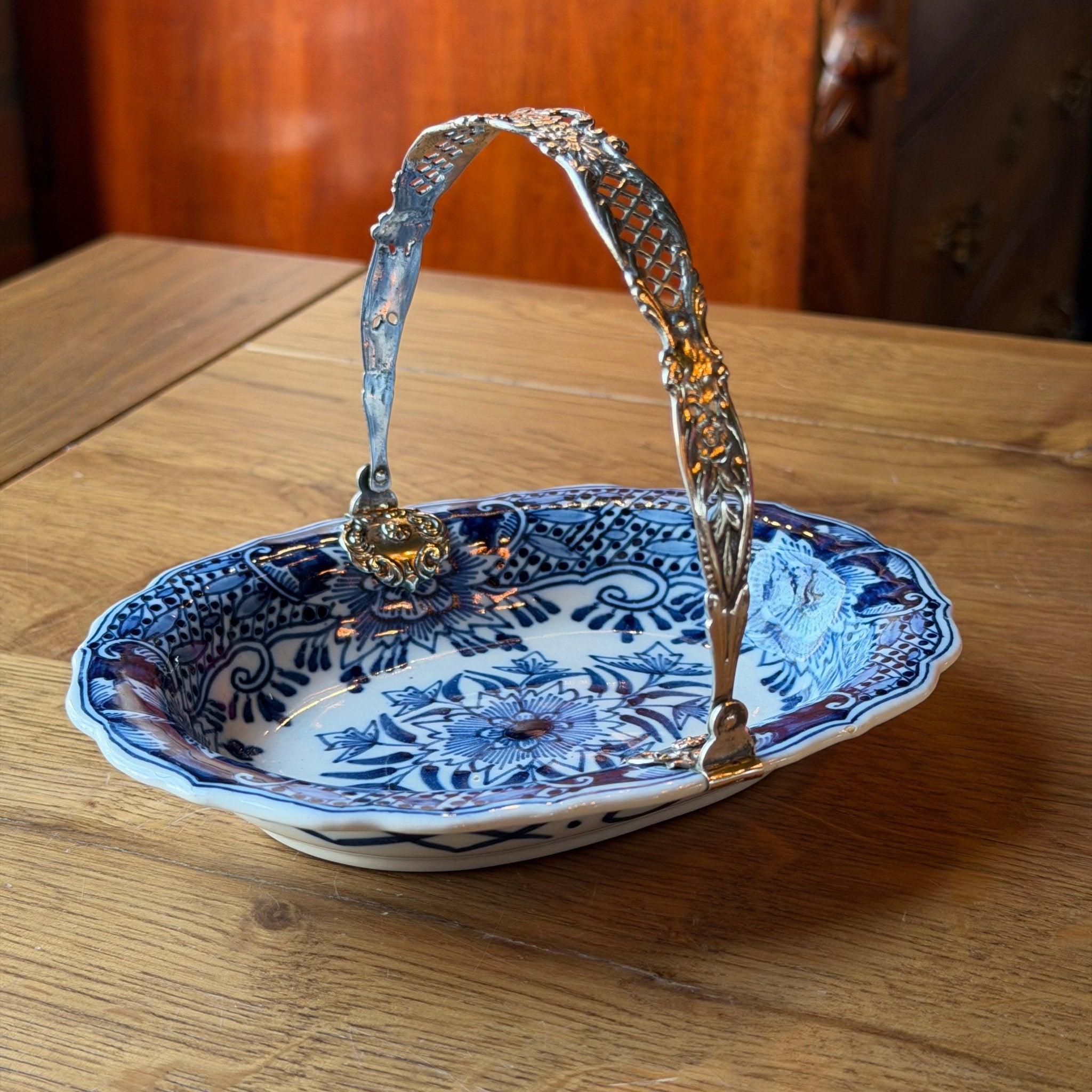
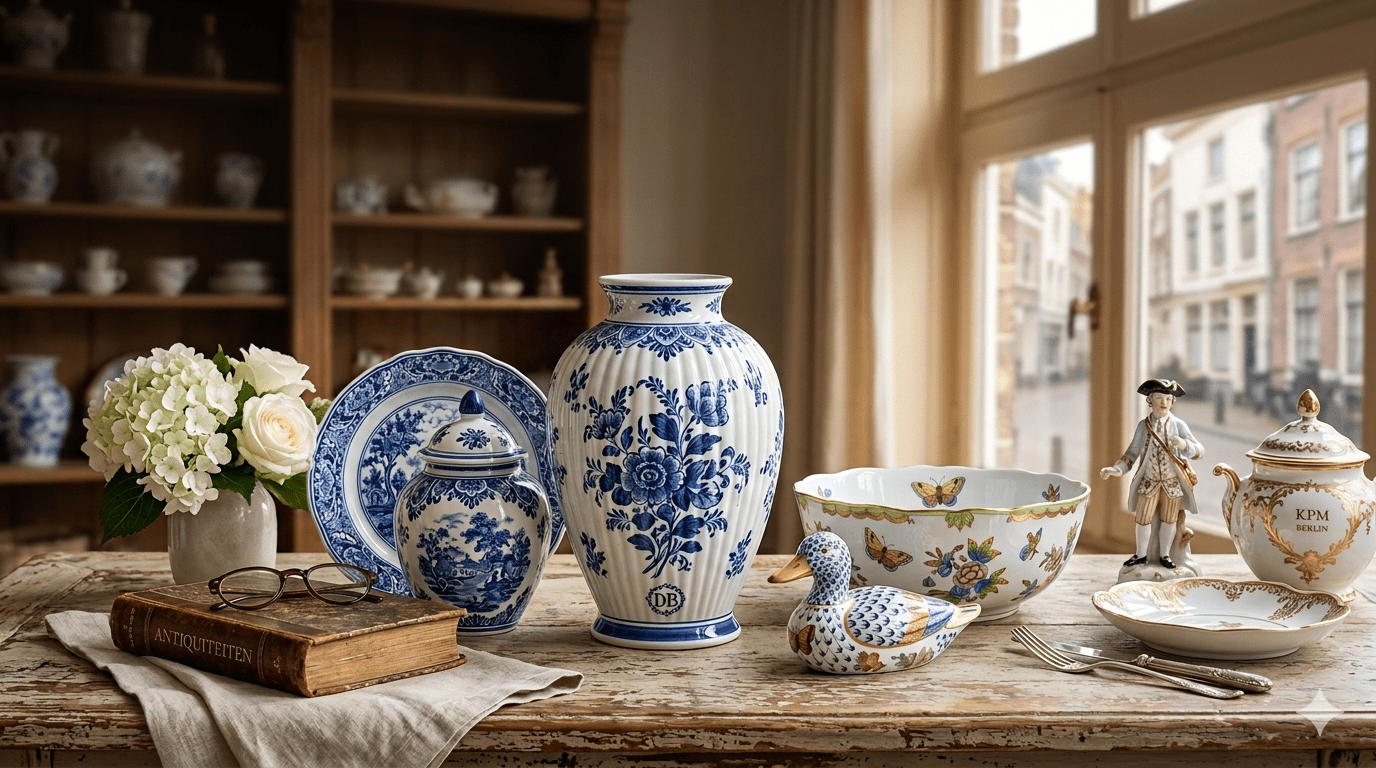
Especially in Delft ware or Southern European majolica, there is often more life than in perfect porcelain.
Stoneware — made for use, not for display cases
Stoneware is functional. It was made for daily use, not for looking at.
- Hard, heavy, and extremely durable
- Often simple, almost utilitarian shapes
- Subtle glazes that only stand out in good light
It is precisely this simplicity that makes it interesting. Good stoneware has tranquility and conviction — it tries to prove nothing.
Porcelain — technically perfect, but not always exciting
Porcelain is often seen as the highest achievable. It is hard, thin, and refined.
But perfection is not automatically interesting.
- Very precisely finished
- Often predictable decoration
- Much mass production from the 19th century onwards
Good porcelain is exceptional. But much porcelain is mainly neat — and that is different from special.
2. Style periods: recognize them without studying them
You don't have to be an art historian to recognize periods. You often see it immediately, if you know what you're looking at.
Rococo & Baroque (18th century)
- Asymmetry and movement
- Lots of ornament and detail
- Light, elegant colors
This work tries to impress. Sometimes successful, sometimes exaggerated.
19th century — repetition of the past
- Neo-Gothic, Neo-Rococo, Neoclassicism
- Technically well executed
- Often less original
Many objects from this period are skilled, but not necessarily exciting. It is often interpretation, not innovation.
Art Nouveau (± 1890–1915)
- Organic lines
- Nature as a starting point
- Soft, flowing forms
Here you see real innovation again. Less rigid, more intuitive.
Art Deco (± 1920–1940)
- Geometry and symmetry
- Contrasts and rhythm
- Stronger visual presence
Art Deco is clearer and more confident. Less subtle, but often more powerful.
Mid-century (± 1950–1970)
- Functional and minimalistic
- New glazes and techniques
- Less ornament, more form
Here the focus shifts: from decoration to design.
3. Where does it come from — and does it matter?
Origin plays a role, but not always in the way people think.
Germany
- Strong in stoneware and porcelain
- Technically very consistent
- Sometimes less playful, but solid
France
- More emphasis on aesthetics
- Often more experimental in form and color
- Variation between regions
Netherlands
- Delft pottery (tin-glazed earthenware)
- Plateel from Gouda and Arnhem
- Decoration often more important than form
England
- Industrial production developed early
- Transfer printing and serial decor
- Sometimes surprisingly refined within mass production
4. What you really need to pay attention to (in person)
This is where the difference between looking and seeing lies.
Weight and balance
A good object feels "right." Not too light, not clunky. It feels good in the hand.
Glaze
- Depth vs. flatness
- Small variations instead of perfect uniformity
- Reaction to light
An interesting glaze subtly changes depending on how you look at it.
Rim and finish
The rim often reveals the quality: sharp or soft, crisp or slightly irregular.
Traces of use
- Light wear can be positive
- Too perfect condition is not always better
- You should recognize restorations
Use provides context. But you must be able to assess damage.
5. Recognizing marks (and where to check them)
Many ceramics and porcelain feature a mark. This can help identify origin, period, and sometimes even the maker.
But beware: a mark is a tool — not a guarantee of quality.
What to look for
- Not every object is marked
- Marks are sometimes added later or faded
- The same factory often used multiple variants over the years
Therefore, it is important to always view a mark in context: material, shape, and finish must match what you see.
Useful resources for checking marks
Use these sources as a reference, not as a final conclusion.
6. What beginners often do wrong
- Focusing too much on decoration
- Confusing perfection with quality
- Overestimating marks without looking at the object itself
- Thinking that older automatically means better
An object must convince on its own. Not just by name or age.
Why ceramics remain interesting
Because it's between art and utility.
- It is made to be used
- But can also be aesthetically strong
- And it changes through time and use
Good pieces remain interesting, even if you look at them longer. Ultimately, that is the only criterion that matters.

Written by Rémon van den Kommer
%0A%0AMost%20people%20look%20at%20decoration.%20At%20color,%20at%20patterns,%20at%20whether%20something%20is%20%22beautiful.%22%0A%0ABut%20once%20you%20know%20what%20to%20look%20for,%20you%20first%20...)