




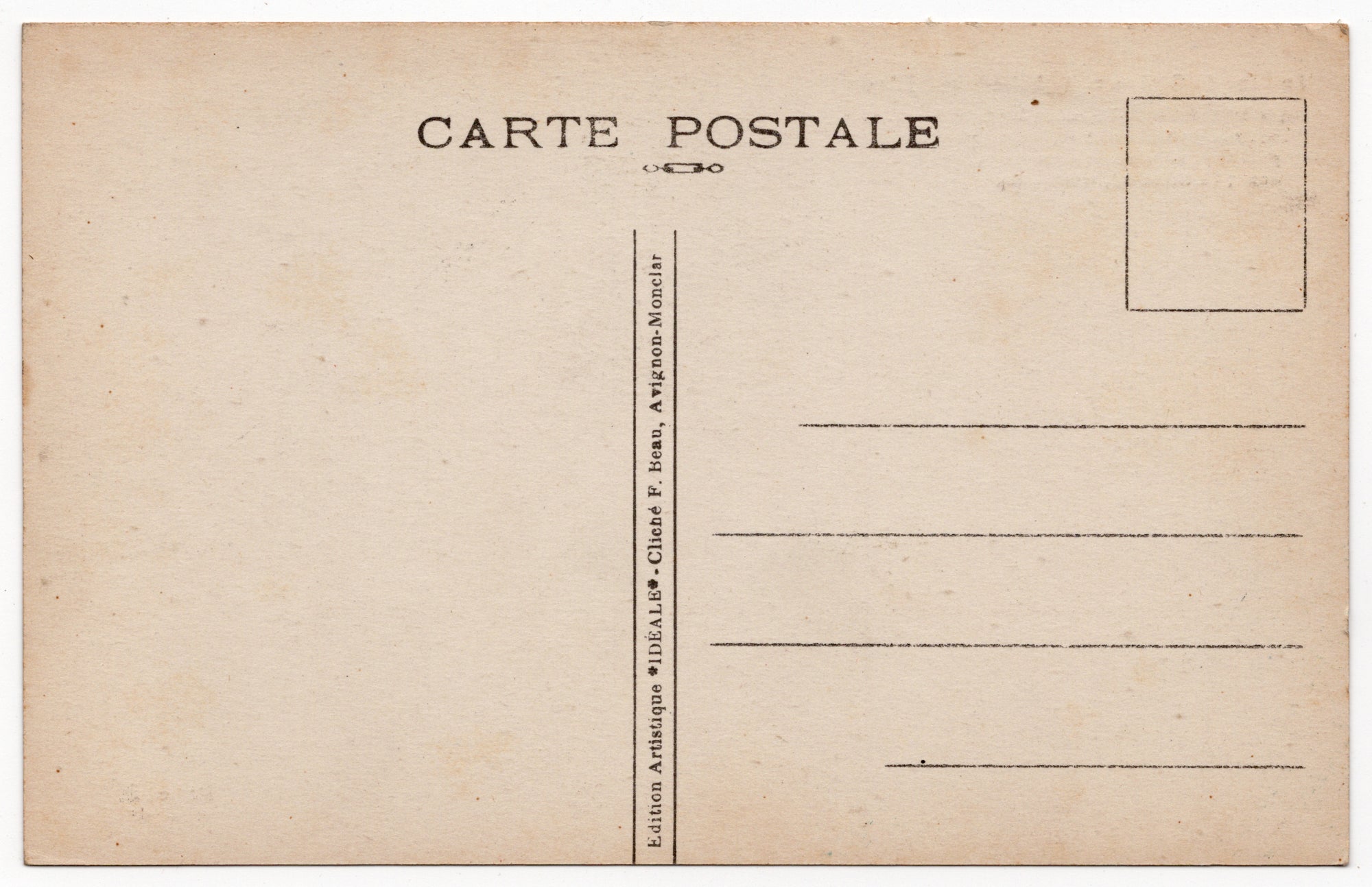
Postcard Pont du Gard Roman aqueduct between Avignon and Nîmes, Ed. Idéale
Curator's note
Carefully packaged for safe delivery
Ships within 1–2 business days
14-day return policy
French postcard from the nineteen-twenties or thirties showing a hand-coloured phototype of the Pont du Gard, the Roman aqueduct between Avignon and Nîmes in southern France. The image shows the monumental structure seen from below, with the three superimposed rows of arches visible along the entire length. On the lower row of piers, a group of visitors walks, illustrating the impressive scale of the aqueduct. In the upper left, the caption "Le Pont du Gard entre AVIGNON et NIMES - Aqueduc romain de 260 m. de long, 50 m. environ de haut, en trois arcades superposées. La première, six arches; la seconde, onze; la troisième, trente-cinq." In the lower right, the publisher's mark "IDÉALE" with signature. Published by Edition Artistique "Idéale", Cliché F. Beau, Avignon-Monclar. The verso is unwritten and unposted, with a divided back. The card is in good condition.
The Pont du Gard was built in the first century AD as part of the fifty-kilometre aqueduct that was to carry spring water from Uzès to Nîmes. The three-tiered structure, forty-six metres high and two hundred and seventy-seven metres long, is among the best preserved Roman aqueducts in the world and was inscribed on the UNESCO World Heritage list in 1985. After the decline of the Roman Empire, the lower level of the aqueduct was used from the Middle Ages as a road bridge over the Gardon, which through active use helped preserve the structure. The historical restoration campaigns under King Louis XV from 1743 onward and again under Napoleon III in the mid-nineteenth century gave the aqueduct the form visible on this postcard. The publisher Edition Artistique "Idéale" in Avignon-Monclar produced during the interwar period a series of educational postcards of the Roman monuments of southern France, each copy bearing a printed notice with factual measurements and historical details that made the card, beyond the visual souvenir, also a small pedagogical instrument.
Dimensions
H 8.7 x B 13.7 cm
Weight
5 grams
Choose options