



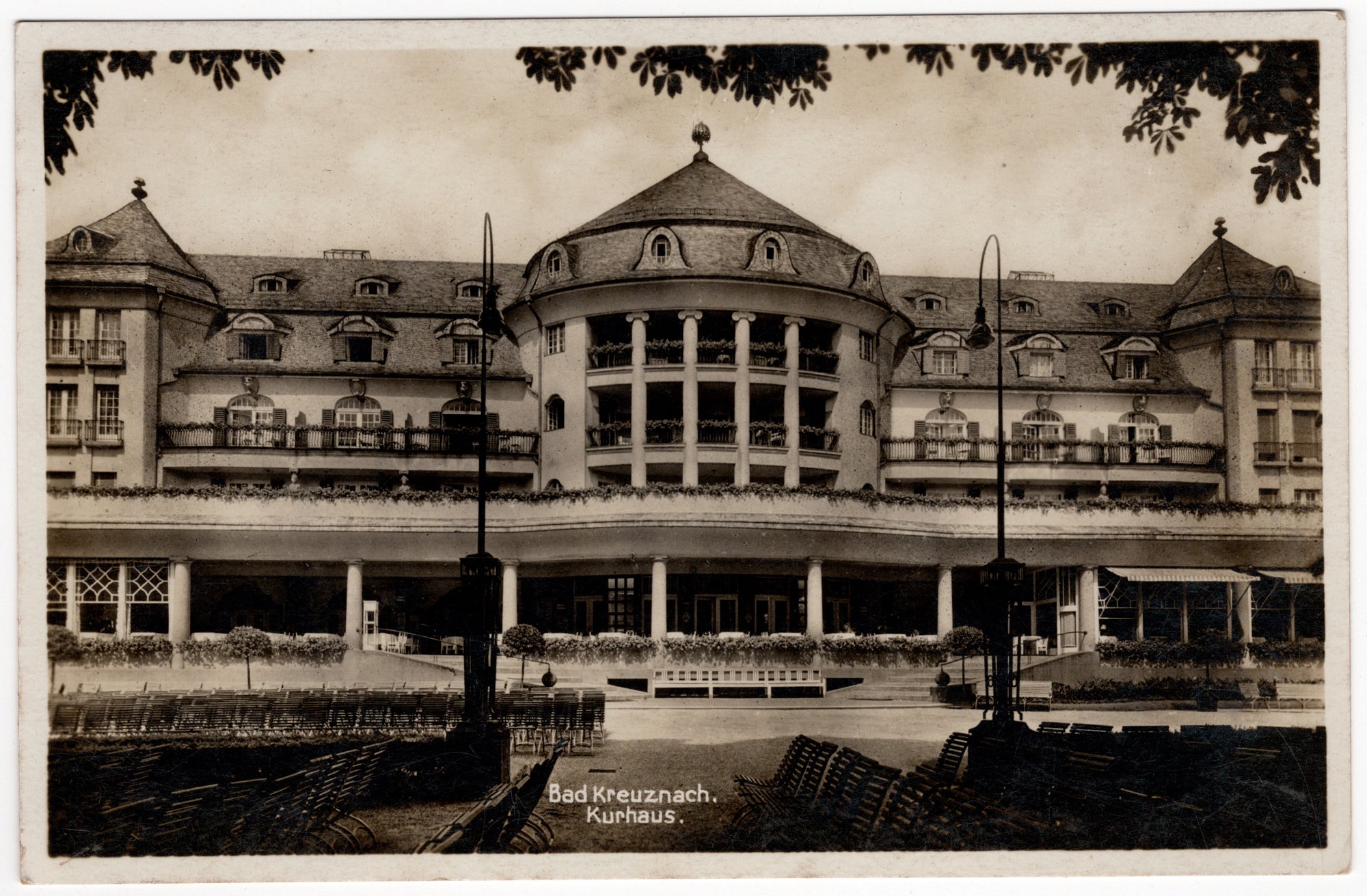
Postcard Bad Kreuznach Kurhaus Pallmann Wiesbaden 1930s
Curator's note
Carefully packaged for safe delivery
Ships within 1–2 business days
14-day return policy
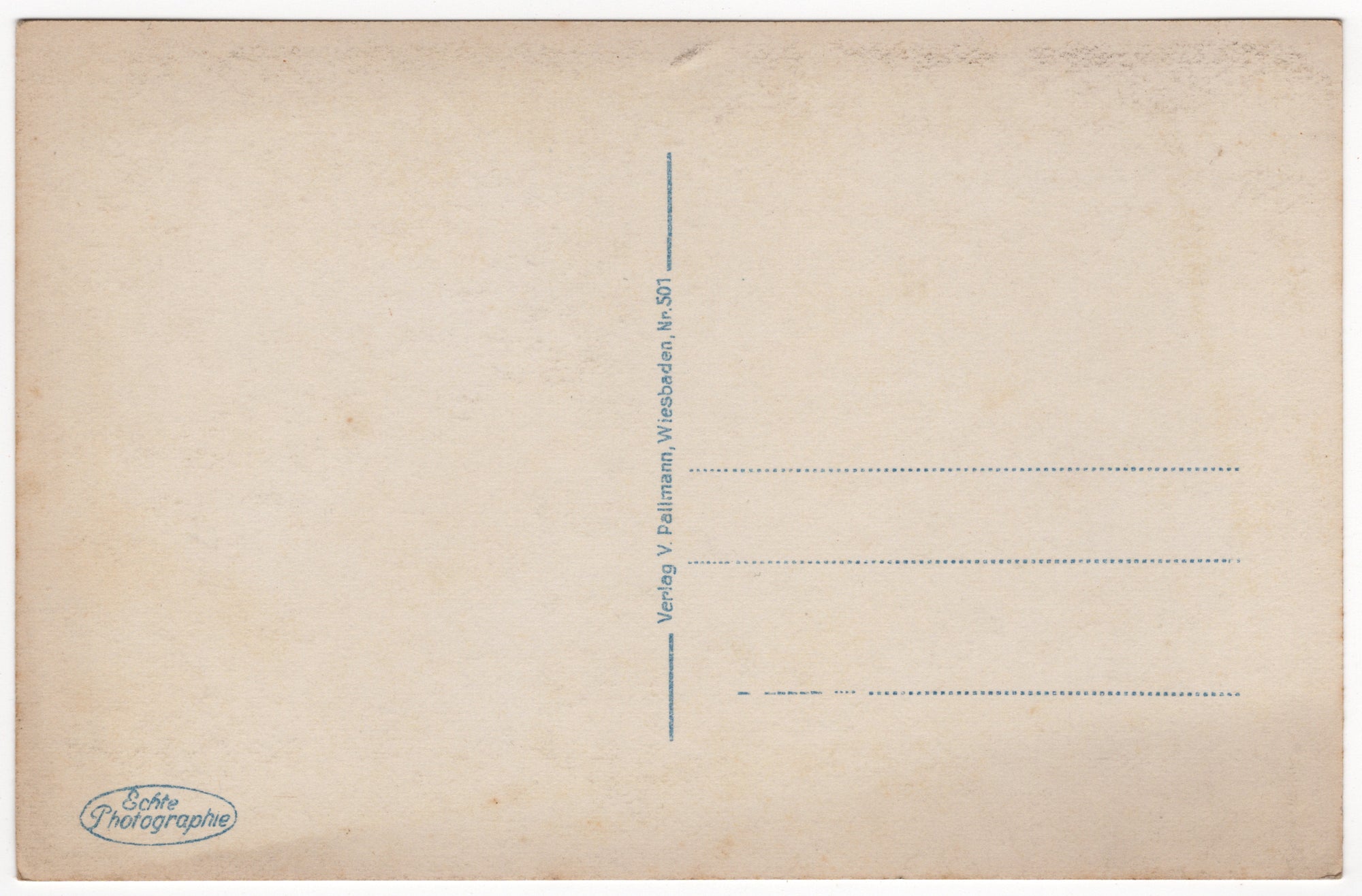
Postcard with a black and white photographic view of the Kurhaus in Bad Kreuznach, seen from the Kurpark with rows of chairs and lampposts in the foreground. The card was published by Verlag V. Pallmann in Wiesbaden under number 501 and bears on the reverse the stamp Echte Photographie: the card is in fact a genuine silver bromide print on photographic paper, not a printed reproduction, which explains the subtle metallic sheen visible under raking light. The card is unused and in good condition.
The Kurhaus was completed in 1913 to a design by the Munich architect Emanuel von Seidl, drawing on the baroque palaces of southern Germany such as the Würzburg Residence. Bad Kreuznach had by then established itself as an international spa town following the 1904 discovery of radon in its local saline springs. The building played a notable role in twentieth-century European history: during the First World War it served as the headquarters of Kaiser Wilhelm II and received, among others, the Tsar of Bulgaria and Mustafa Kemal, later known as Atatürk. The composition of the card, with the dark silhouette of foliage above and the empty rows of chairs in the foreground, betrays the photographic sensibility of the 1930s during which this edition probably appeared.
Dimensions
H 9.2 x W 14.1 cm
Weight
5 grams
Choose options