KNOWLEDGE BASE – COLOGNE POTS
Identifying, Provenance & Value of German Stoneware (1800–1900)
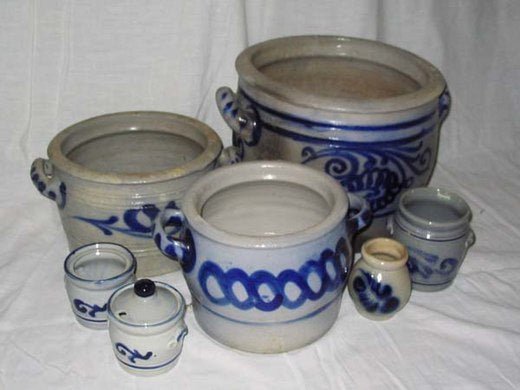
Cologne pots are among the most recognizable examples of German stoneware from the 19th century. They were brought to the Netherlands on a large scale from the Westerwald region and served as utensils for storing and transporting food. Despite their simple function, they are now valuable collector's items due to their shape, material, and historical context.
Origin of Cologne pots
The term does not refer to the city of Cologne itself, but to production areas such as:
-
Westerwald
-
Siegburg
-
Raeren
-
French
From the 18th and 19th centuries, the Westerwald region in particular became the centre for stoneware destined for the Dutch market.
How do you recognize Cologne pots?
1. Material
-
Gray stoneware
-
Hard, high-fired
-
Extremely durable
2. Salt glaze
A slightly glossy surface created by adding salt in the oven. This made the pots waterproof and food-safe.
3. Cobalt blue decoration
Early pots (ca. 1800–1860) often have:
-
stylized plants
-
animals (deer, birds, horses)
-
symbolic ornaments
4. Functional shapes
Common types:
-
anchovy pots
-
mustard pots
-
storage jars
-
jugs for liquor or vinegar
Use in the Netherlands
Cologne pots were widely used for:
-
fish and anchovies
-
mustard
-
preserves
-
butter and margarine
-
strong drink
Traders from the Westerwald traveled to the Netherlands themselves, which meant that these pots became widely distributed.
Pots with company name
Between 1860 and 1925, Dutch dealers had their own names printed or painted on stoneware. This makes such pots attractive to collectors because of their regional and historical context.
Dating & Value
What do you pay attention to?
-
blue decoration (early pots)
-
stamps or markings
-
glaze quality
-
chips or hairline cracks
-
size (large pots are rarer)
Value factors
-
old age
-
state of the glaze
-
rarity of decorations
-
regional variants
Why Cologne pots remain popular
-
Historical value
-
Timeless appearance
-
Craft production
-
Sustainable materials
View more Cologne pots
→ Category Cologne Pots
→ Category Antiques & Stoneware